Most single-day sports events land general liability coverage for $75 to $400, with venues typically requiring $1M per occurrence and $2M aggregate in coverage. Add liquor or participant accident protection and expect another $50 to $250. Get your quote and certificate of insurance at least a week out, not the night before.
TL;DR:
- Most small sports events pay between $75 and $200 for basic liability coverage, while larger events or those serving alcohol can exceed $600.
- Additional coverage such as participant accident insurance and liquor liability can add $50 to $250 each, significantly raising overall costs.
- Factors like attendance, event duration, sport type, alcohol service, and venue requirements primarily influence insurance premiums.
- Providing verified rosters, digital waivers, and clear vendor information can lower insurance costs by demonstrating lower risk.
- Bundling liability with cancellation coverage and requesting quotes early helps organizers secure better rates and streamline the process.
Table of Contents
- How Much Does Sports Event Insurance Cost?
- What Affects Price? The Seven Main Cost Drivers
- Which Coverage Types Actually Matter for Your Event?
- Comparing the Top U.S. Sports Event Insurance Programs
- How Do You Actually Buy a Policy?
- Practical Ways to Cut Underwriting Friction
- What Youth and High-School Organizers Get Wrong About Budgeting
- A Practical Complement to Your Insurance Checklist
- Sources
- FAQ
How Much Does Sports Event Insurance Cost?
Budgeting for event coverage gets a lot easier once you see it broken into tiers. A backyard 3v3 tournament and a two-day regional showcase are not the same underwriting problem, and the price tags reflect that.

For small events, think a weekend 5K, a single-field youth soccer jamboree, or a rec-league softball tournament under 200 people, starting premiums often run $75 to $200 for basic general liability. That range shows up across most one-day sports event policies according to event insurance pricing data.
Mid-size and larger events push higher. A multi-field high-school tournament, a 5K with 1,000+ runners, or anything serving alcohol tends to fall in the $200 to $600+ range once you factor in attendance and risk level.
Add-ons stack on top:
- Participant accident coverage: roughly $50 to $150 per event, depending on contact level
- Liquor liability: often $50 to $250, higher without a licensed bartending service
- Event cancellation: starts around $130 and scales with the event’s total value
For instance, a youth pickup soccer event with about 150 participants may have liability coverage costs starting near $85. Larger or multi-day events with alcohol service and added protections may see premiums in the several hundreds of dollars range, depending on the specific coverage and endorsements.
What Affects Price? The Seven Main Cost Drivers
Insurers don’t pull numbers out of thin air. Seven factors do almost all the work in setting your premium, and most of them are things you can actually influence before you ever request a quote.
- Attendance and duration. More people and more hours on the field mean more exposure, and premiums climb accordingly.
- Sport type and contact level. Flag football costs less to insure than tackle football or wrestling; anything with equipment demonstrations or trick plays gets flagged.
- Alcohol service. Serving beer without a licensed bartender is one of the fastest ways to spike your quote.
- Venue requirements. Some venues demand “additional insured” status and higher limits before they’ll even sign a rental agreement.
- Organizer claims history. A clean track record with no prior claims often earns a better rate on renewal.
- Risk controls in place. Signed waivers, on-site medical staff, security, and certified officials all signal lower risk to underwriters.
- Coverage limits and deductible. Higher limits cost more upfront but cost far less than an uncovered lawsuit.
Pro Tip: Hire a licensed bartender instead of letting volunteers pour drinks. Carriers routinely price licensed service lower than self-serve setups, sometimes cutting your liquor liability add-on by half.
Which Coverage Types Actually Matter for Your Event?
Not every sports event needs every type of coverage, but skipping the wrong one is how organizers end up personally on the hook.
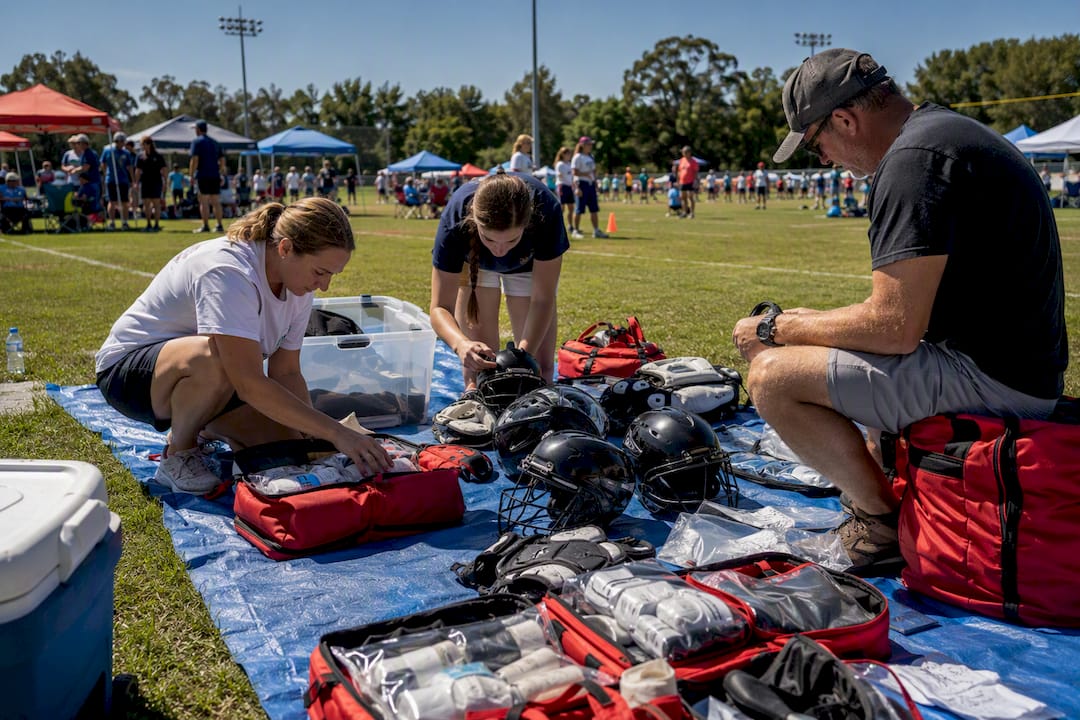
General liability is the floor, not the ceiling. It covers third-party bodily injury and property damage, and $1M per occurrence with $2M aggregate has become the standard limit most venues expect to see on a certificate.
Participant/accident insurance covers medical costs for athletes themselves, separate from third-party claims. This matters most for contact sports and youth tournaments where a sprained ankle or worse is a when, not an if.
- Liquor liability: required almost universally if you’re selling or serving alcohol; licensed bartending services typically bring the cost down
- Event cancellation and weather protection: worth it for outdoor events with real financial stakes (rented stadiums, paid officials, non-refundable deposits), less critical for a free community 5K
- Equipment and vendor coverage: expect food trucks and equipment vendors to carry their own policies, and ask for their certificates too
Skip cancellation coverage on a low-budget scrimmage. Do not skip it on a ticketed tournament where a rainout means refunding hundreds of buyers.
Comparing the Top U.S. Sports Event Insurance Programs
Shopping multiple providers before you commit is standard practice, and the differences between programs are often about speed and add-ons rather than price alone.
| Provider | Starting Price | Coverage Limits | Add-Ons Available | Instant Quote/COI |
|---|---|---|---|---|
| EventHelper | ~$75+ | Up to $1M/$2M standard | Liquor, cancellation | Yes, instant online |
| American Specialty Express | ~$100+ | $1M/$2M standard | Participant accident, liquor | Yes |
| OneDayEvent | ~$100 to $250 | $1M/$2M standard | Liquor, limited add-ons | Yes, same-day |
| K&K Insurance | Varies by program | $1M/$2M, higher available | Participant accident, cancellation | Online application, carrier review |
| Sadler Insurance | Published attendance-band pricing | Up to $5M available | Liquor, cancellation, participant accident | Yes |
EventHelper and OneDayEvent both lean into speed, useful when you’re locking in a venue on short notice. Sadler Insurance stands out for publishing sample premium tables by attendance band, a rare transparency move that lets you estimate cost before ever filling out a form. K&K Insurance is built specifically for amateur tournaments, though it’s worth checking program eligibility since some carriers cap participant counts or exclude certain paid-attendance formats. American Specialty Express advertises the lowest published entry point among dedicated sports programs.
How Do You Actually Buy a Policy?
Getting covered is mostly a paperwork exercise, and doing it in the right order saves you a scramble the week of your event.
- Gather your details first: venue name and address, expected attendance, whether alcohol will be served, the sport and any special activities, and a list of vendors.
- Request quotes early. Liability coverage can often be bound as little as one day before your event, but cancellation coverage usually needs a two-week head start or more.
- Ask for “additional insured” status by name. Venues almost always want this wording exactly, not a generic policy summary, because it shifts liability risk directly onto your coverage instead of theirs.
- Watch for red flags that slow things down: pyrotechnics, extreme sports, prior claims, or unlicensed alcohol service can all trigger manual underwriting review instead of an instant bind.
Practical Ways to Cut Underwriting Friction
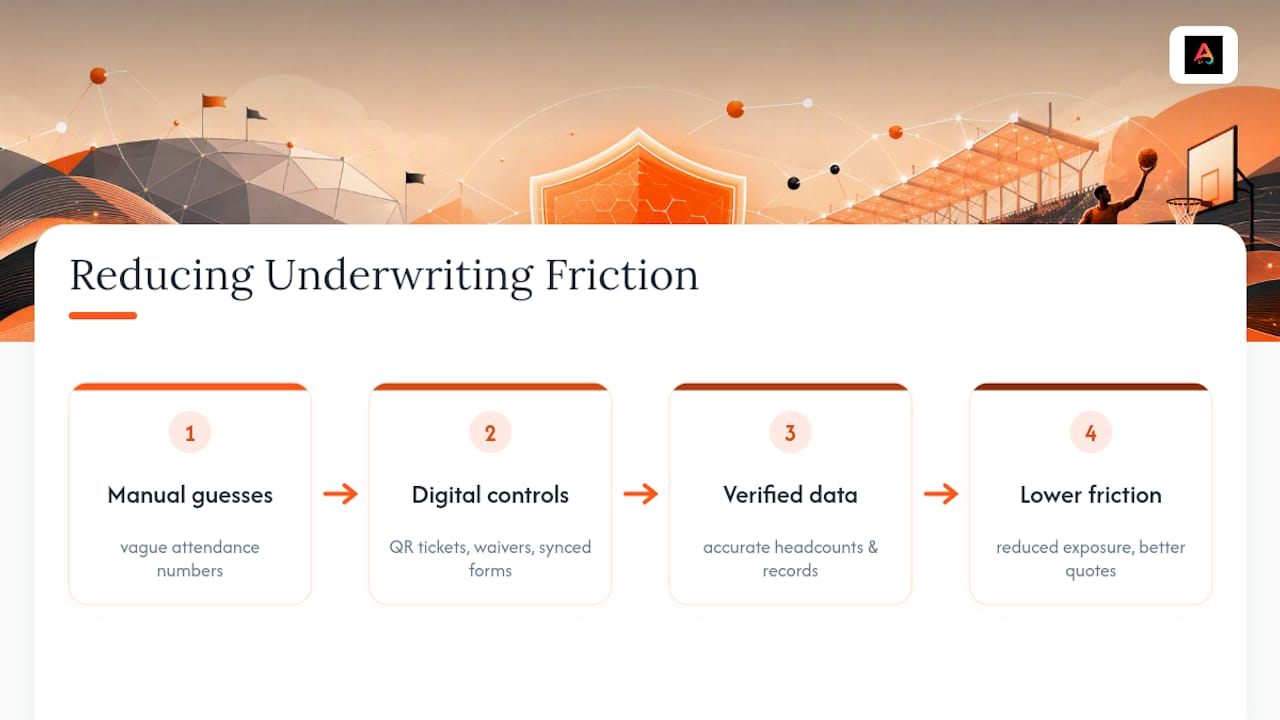
Insurers price risk based partly on how organized you look on paper, and using tools for real-time monitoring can help reduce insurance exposure. QR-verified ticketing and rosters replace vague attendance guesses with real headcounts, which narrows unknown-attendee exposure. Digital waivers and synced medical forms for minors show carriers you’ve already handled the paperwork risk they’d otherwise price in. Escrowed payments and clear vendor contracts reduce dispute exposure too. Bring these controls to your insurance conversation, not just your attendance number.
What Youth and High-School Organizers Get Wrong About Budgeting
Most organizers treat the insurance quote as the last box to check before an event, and that’s backward. The real cost driver isn’t the policy line item. It’s how much chaos you’re asking an underwriter to price sight-unseen.
Conventional advice tells you to “get multiple quotes” and call it a day. That’s fine, but it misses the bigger lever: the information you hand a carrier before they even generate a number. An organizer who shows up with a guessed headcount, a verbal agreement with a venue, and no waiver process is going to get priced like a liability. An organizer who shows up with a verified roster, digital waivers already signed, and a clear vendor list looks like a lower-risk bet, and pricing often reflects that.
The other overlooked piece: bundling. Buying liability and cancellation together instead of separately can save around 15% according to several program notes, yet most first-time organizers buy them piecemeal because nobody tells them to ask.
If you’re running youth sports on a tight budget, prioritize the admin work before you ever request a quote. It changes the number you get back.
— Abdulazeez
A Practical Complement to Your Insurance Checklist
Athlo won’t sell you a liability policy, but it handles the administrative groundwork that makes underwriters (and venues) more comfortable with your event. QR-ticketed entry gives you a verified headcount instead of a guess. Digital medical forms and waivers, including the ones for minors, sync ahead of the event instead of piling up on a clipboard at check-in. Roster and attendance tracking means you know exactly who showed up, which matters if a claim ever comes up after the final whistle.

This is built for youth and high-school event organizers, pickup league runners, and coaches who are juggling registration, payments, and now insurance paperwork on top of actually running the event. If you’re coordinating a tournament, a pickup series, or a ticketed showcase, having your rosters, waivers, and ticketing already organized in one place makes the insurance conversation faster, not slower. Download Athlo on the App Store or Google Play and get your next event’s admin side sorted before you request your first quote.
This article is general information, not a substitute for advice from a qualified financial advisor. Consult a qualified financial professional about your own circumstances before acting on anything here.
Sources
- How Much Does Event Insurance Cost in 2026? Full Guide
- Special Event Liability Insurance
- GEICO — Event insurance details
FAQ
How much does a $1,000,000 liability insurance policy cost?
For a single sports event, a $1M/$2M general liability policy typically starts around $75 to $200 for smaller gatherings and can run $200 to $600+ for larger or higher-risk events.
How much does event insurance usually cost?
Most event liability policies range from $75 to $600 or more, depending on attendance, venue requirements, and whether you add liquor or cancellation coverage.
How much does sports insurance cost?
Sports event liability insurance generally starts near $75 to $100 for small events and climbs based on contact level, attendance, and add-ons like participant accident coverage.
How much does $500,000 liability insurance cost?
Lower limits below the standard $1M/$2M policy typically cost less, though most U.S. venues now expect the higher limit as a baseline requirement, so savings are often minimal.
When should I buy my sports event insurance policy?
Liability coverage can often be bound as little as one day before your event, but cancellation protection usually needs to be purchased two weeks or more in advance.
Recommended